
Sac metal bükme işleminin başarısı, ilk parçanın pres makinesine ulaşmasından çok önce başlar.
Birçok imalat atölyesinde, tutarsız bükme açıları, aşırı takım aşınması, beklenmedik makine sınırlamaları veya tekrarlanan kurulum ayarlamaları gibi üretim zorlukları, genellikle gerçek bükme işleminden ziyade planlama aşamasında ortaya çıkar.
Her bükme işlemi birden fazla değişken içerir. Malzeme türü, sac kalınlığı, bükme uzunluğu, takım seçimi, makine kapasitesi ve geri yaylanma davranışı, nihai sonucu etkileyen faktörlerdir. Deneyimli operatörler bile yeni malzemelerle, farklı kalınlıklarla veya alışılmadık takım konfigürasyonlarıyla çalışırken zorluklarla karşılaşabilirler.
Üretim giderek verimlilik ve hassasiyete odaklanırken, daha fazla üretici üretim planlamasını desteklemek için dijital mühendislik araçlarına yöneliyor. Pres Freni Hesaplayıcısı, üretim başlamadan önce bükme koşullarını değerlendirmek için pratik bir yol sunarak mühendislerin ve operatörlerin doğruluğu artırmak, israfı azaltmak ve değerli ekipmanları korumak için bilinçli kararlar almalarına yardımcı olur.
Üretim başlamadan önce birçok bükülme sorunu önlenebilir.
Makine kapasitesi, takım konfigürasyonu ve malzeme özellikleri doğru şekilde değerlendirilmediğinde, üreticiler şu sorunlarla karşılaşabilir:
Üretim atölyeleri, doğru planlamaya zaman ayırarak üretim tutarlılığını önemli ölçüde artırabilir ve gereksiz duruş sürelerini azaltabilir.
Bu durum, özellikle karbon çeliği, paslanmaz çelik, alüminyum ve yüksek mukavemetli alaşımlar da dahil olmak üzere çok çeşitli malzemeleri işleyen üreticiler için büyük önem taşımaktadır.
Farklı malzemeler bükme işlemleri sırasında farklı tepkiler verir.
Örneğin, paslanmaz çelik, mukavemet, esneklik ve geri yaylanma özelliklerindeki farklılıklar nedeniyle genellikle alüminyumdan farklı bükme koşulları gerektirir.
Bu malzemeye özgü davranışları anlamak, doğru sonuçlar elde etmek ve üretim hatalarını en aza indirmek için çok önemlidir.
Malzeme kalınlığı, makine seçimi, takım gereksinimleri ve bükme performansı üzerinde doğrudan bir etkiye sahiptir.
Kalınlık arttıkça, üreticilerin mevcut ekipman ve aletlerin uygulama için uygun olup olmadığını dikkatlice değerlendirmeleri gerekir.
Yanlış planlama, aşırı makine yüküne veya bükme hassasiyetinin azalmasına yol açabilir.
Daha uzun virajlar, artan kuvvet gereksinimleri ve potansiyel sapma sorunları da dahil olmak üzere ek zorluklar ortaya çıkarır.
Büyük iş parçaları için, parçanın tüm uzunluğu boyunca tutarlı bükme kalitesini korumak amacıyla doğru makine konfigürasyonunun seçilmesi kritik önem taşır.
Zımba ve kalıp seçimi, bükme işlemini önemli ölçüde etkiler.
Doğru takım seçimi şunları iyileştirebilir:
Öte yandan, yanlış alet kullanımı gereksiz kurulum sorunlarına ve tutarsız sonuçlara yol açabilir.
Geleneksel bükme referans tabloları hâlâ kullanışlıdır, ancak modern imalat ortamları genellikle daha hızlı ve daha esnek karar verme gerektirir.
Dijital araçlar, mühendislerin birden fazla tabloyu veya mühendislik referansını manuel olarak incelemeye gerek kalmadan üretim koşullarını hızlı ve tutarlı bir şekilde değerlendirmelerine olanak tanır.
Bu yaklaşım, farklı operatörler, vardiyalar ve üretim tesisleri genelinde üretim süreçlerinin standartlaştırılmasına yardımcı olur.
Operasyonel verimliliği artırmak isteyen şirketler için dijital planlama araçları, modern sac metal imalatının giderek daha önemli bir parçası haline gelmiştir.
Profesyonel bir pres freni hesaplayıcısı, üretime başlamadan önce bükme koşullarını değerlendirme sürecini basitleştirir.
Kullanıcılar, yalnızca deneyime veya manuel hesaplamalara güvenmek yerine, gerçek iş gereksinimlerine dayalı olarak değerli üretim içgörülerini hızla elde edebilirler.
Tipik faydalar şunlardır:
Bu bilgiler, üreticilerin verimliliği artırırken operasyonel riskleri azaltacak bilinçli kararlar almalarına yardımcı olur.
Pres freni hesaplayıcısının en büyük avantajlarından biri, değerli malzemeler ve makine zamanı harcanmadan önce üretim parametrelerini doğrulama olanağıdır.
Üreticiler, temel bükme koşullarını önceden inceleyerek şunları yapabilirler:
Bu proaktif yaklaşım, özellikle hassasiyetin kritik olduğu özel imalat projeleri, düşük hacimli üretimler ve karmaşık bükme uygulamaları için son derece değerlidir.
Üretim planlamasını basitleştirmek ve bükme doğruluğunu artırmak için, sac metal işleme profesyonelleri için geliştirilmiş çevrimiçi Pres Bükme Hesaplayıcısını kullanın.
Bu araç, kullanıcıların bükme koşullarını hızlı bir şekilde değerlendirmelerine ve makine seçimi, takım konfigürasyonu ve üretim planlaması için öneriler almalarına olanak tanır.
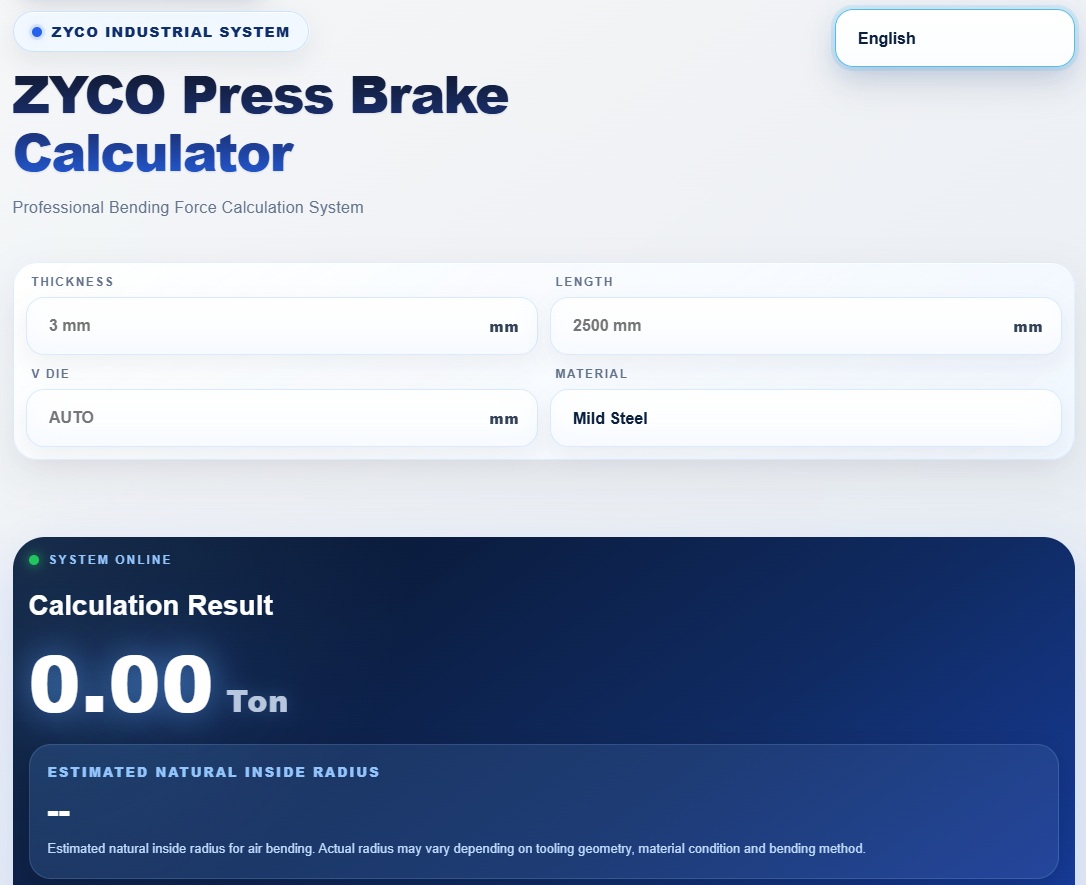
İster yeni bir proje hazırlıyor olun, ister takım seçeneklerini karşılaştırıyor olun veya makinenin uygunluğunu doğruluyor olun, bu hesaplayıcı üretim başlamadan önce daha iyi karar vermenize yardımcı olacak hızlı ve pratik bir yol sunar.
Tutarlı bükme sonuçları elde etmek için üreticiler her zaman şunları yapmalıdır:
Bu uygulamaları dijital mühendislik araçlarıyla birleştirmek, hem ürün kalitesini hem de operasyonel verimliliği artırmaya yardımcı olabilir.
Modern sac metal imalatı, güçlü makinelerden daha fazlasını gerektirir. Tutarlı ve yüksek kaliteli bükme sonuçları elde etmek, üretime başlamadan önce dikkatli planlama, doğru parametre seçimi ve bilinçli karar vermeye bağlıdır.
Pres freni hesaplayıcısı, üreticilerin kritik bükme koşullarını değerlendirmelerine, süreç tutarlılığını iyileştirmelerine ve maliyetli üretim hatalarını azaltmalarına yardımcı olur. Dijital araçları planlama sürecine entegre ederek, imalat atölyeleri verimliliği artırabilir, ekipmanı koruyabilir ve çok çeşitli bükme uygulamalarında daha iyi sonuçlar elde edebilir.
Bükme hazırlığına daha güvenilir bir yaklaşım arayan mühendisler, operatörler ve üretim yöneticileri için profesyonel bir Pres Bükme Hesaplayıcısı, modern üretimde vazgeçilmez bir kaynaktır.

E -posta adresinizi ve gereksinimlerinizi bırakın, profesyonel satış ekibimiz sizin için en uygun çözümü geliştirecektir.


telif hakkı
© 2026 Nanjing Zyco CNC Machinery Co., Ltd. Her hakkı saklıdır
.
 AĞ DESTEKLENİYOR
 Türkçe
 English
 français
 Deutsch
 italiano
 русский
 português
 español
 한국의
한국의 العربية